Suite 01 · Game Rules
Game rules for the classic trick-taking games
Complete rules for Euchre, partnership Pinochle and Spades: the deck, the deal, making trump, the bowers, nil bids and the score that ends the game.
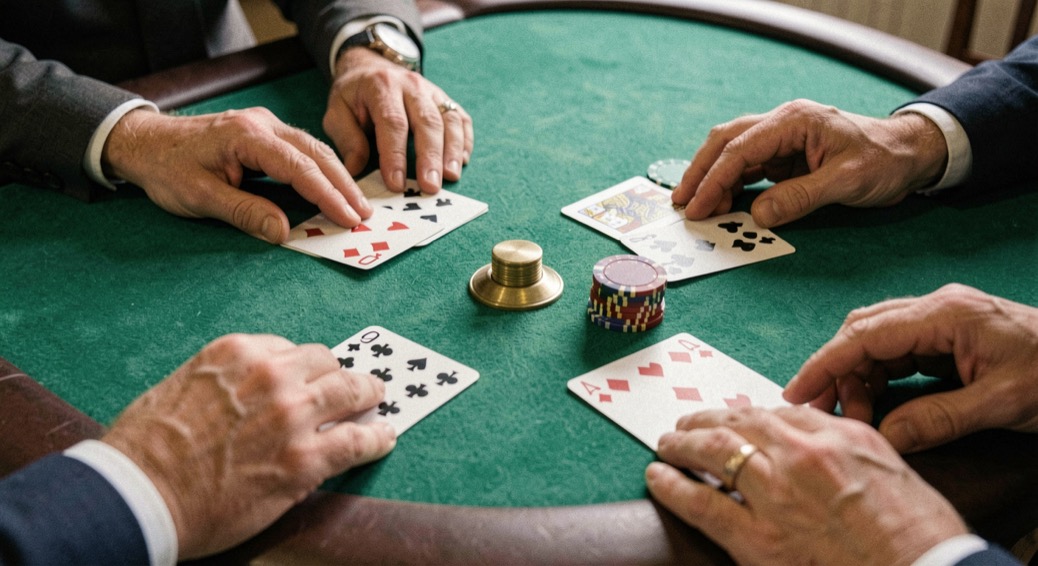
Every argument at a card table is a rules argument, and almost every rules argument dies the moment someone reads the standard game calmly from the deal onward. This suite does exactly that for the three games that anchor American tournament play: Euchre and its bowers, partnership Pinochle and its meld count, Spades and its nil bids. Each guide follows the same order a real evening follows: what deck you need, how the cards go out, how trump or the contract is set, how the tricks are played, and what the score does next.
The guides stick to the published standard game and say so when a popular house variant disagrees. Where a table must choose, the guide says which choice the tournaments make, so the house rule is a decision instead of a discovery.
In this suite
-
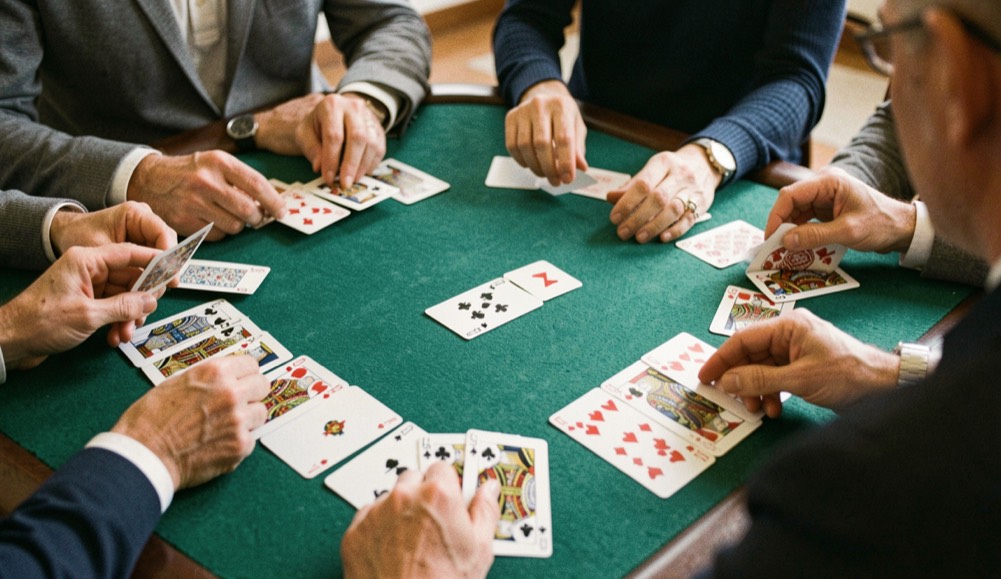
Euchre rules: the 24 card game played right
Euchre is the fastest partnership trick game in the American parlor, and nearly every dispute at the table dissolves once the standard game is laid out deal by deal.
-
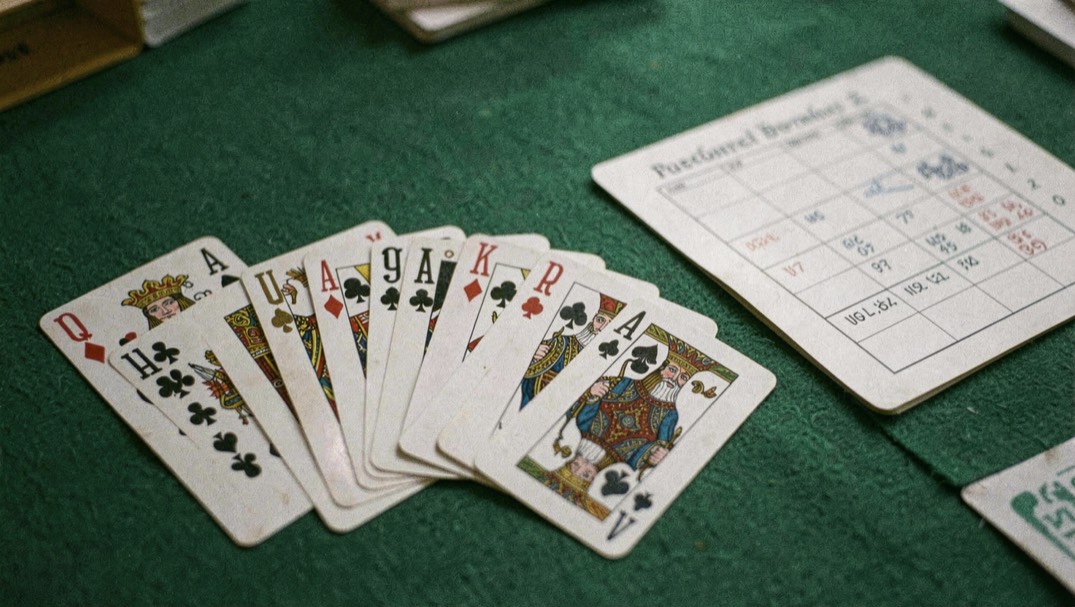
Pinochle rules: partnership auction pinochle
Pinochle looks intimidating for one round of bidding, then reveals itself as the most arithmetic-friendly game in the parlor: count meld, count tricks, make the bid.
-
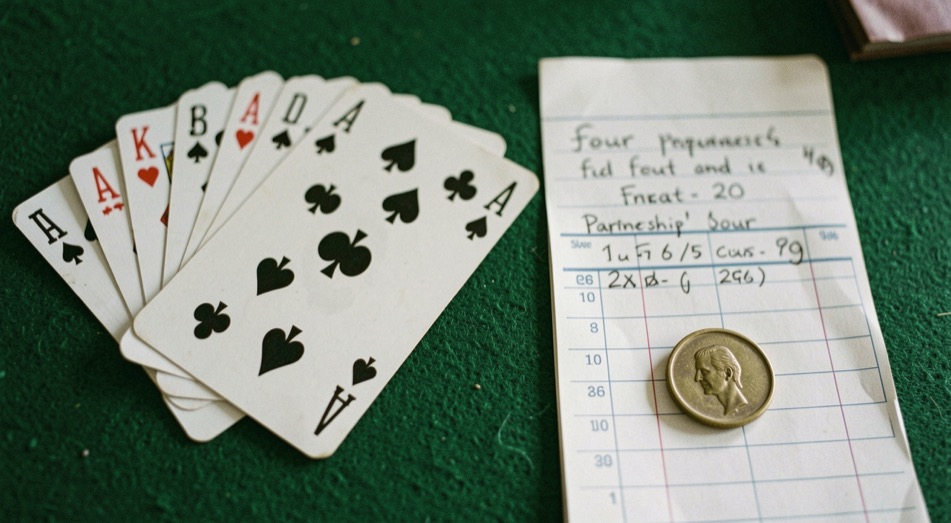
Spades rules: bids, nil and bags explained
Spades is the great American partnership bid game: thirteen tricks, spades always trump, and a scoring system that punishes greed with bags as surely as it rewards nerve with nil.
Every guide in this suite reads against the Scoring & Sheets arithmetic, and two neighbouring suites extend it: Strategy Guides and Tournament Formats.