Suite 05 · Card Game History
Card game history: where the classics came from
How Euchre crossed from the Rhine to the Pennsylvania Dutch country, and how French binocle became the Pinochle of American union halls.
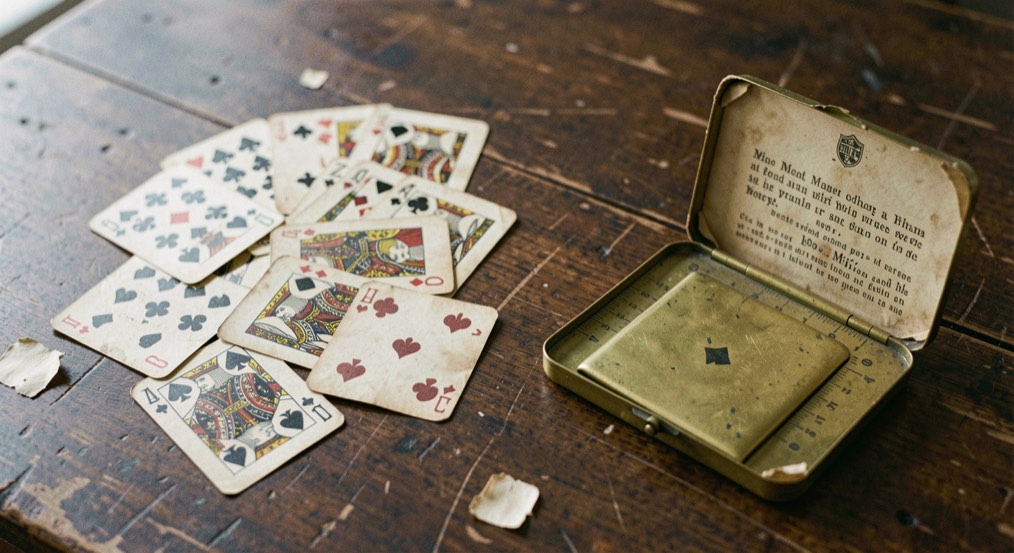
The American classics are immigrant games, and their routes are traceable in the printed record: rule booklets, newspaper columns and the memories of the communities that kept them. Euchre came from the Alsatian and German card table into Pennsylvania Dutch country and up the Ohio valley, and it gave the world the joker. Pinochle came from French binocle and German Binokel, and it became the game of union halls and veteran lodges.
These histories keep to what is published and flag what is disputed. No invented tournaments, no fake anecdotes: the real story is better, because the real story is about how games travel with people, survive the passage, and end up on a thousand kitchen tables under different names.
In this suite
-
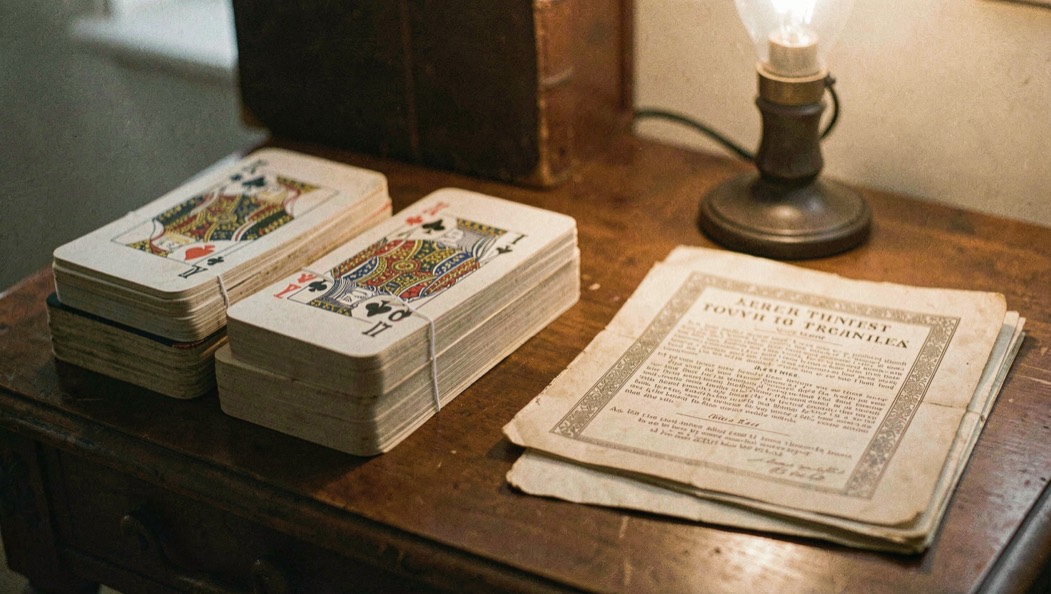
Pinochle history: binocle crosses the ocean
Pinochle arrived in America as a French and German cousin of bezique and became, within two generations, the loudest game in the American parlor: meld shouted, counted, and written down.
-
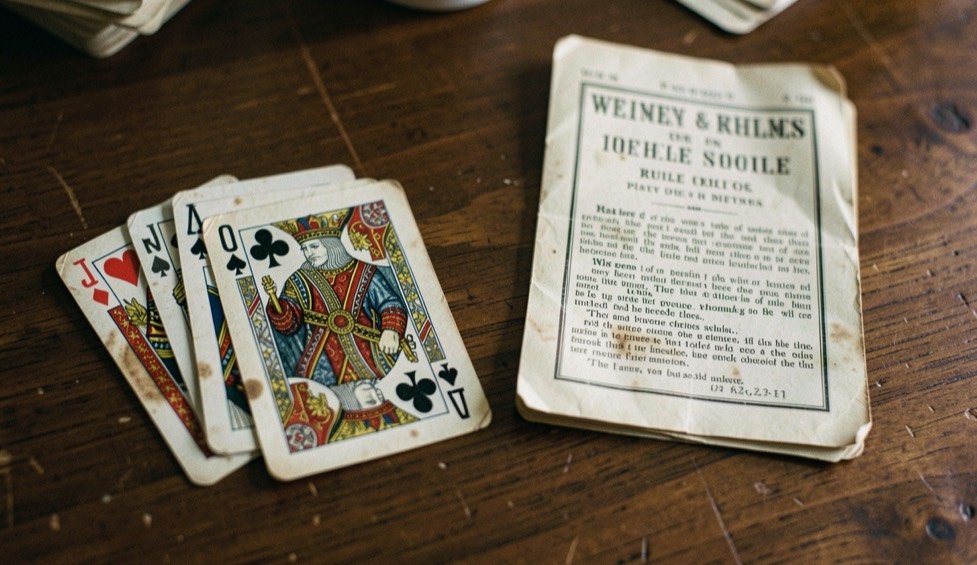
Euchre history: from the Rhine to the Midwest
Euchre is an immigrant game whose route can be traced in the printed record: from the Upper Rhine, through the Pennsylvania German country, up the Ohio and into every parlor in the Midwest.
Every guide in this suite reads against the Scoring & Sheets arithmetic, and two neighbouring suites extend it: Game Rules and Strategy Guides.