Scoring & Sheets
Pinochle scoring: meld, tricks and the count
Pinochle scores in two books, meld first and tricks second, and a table that keeps both books cleanly never argues about anything but the bid.
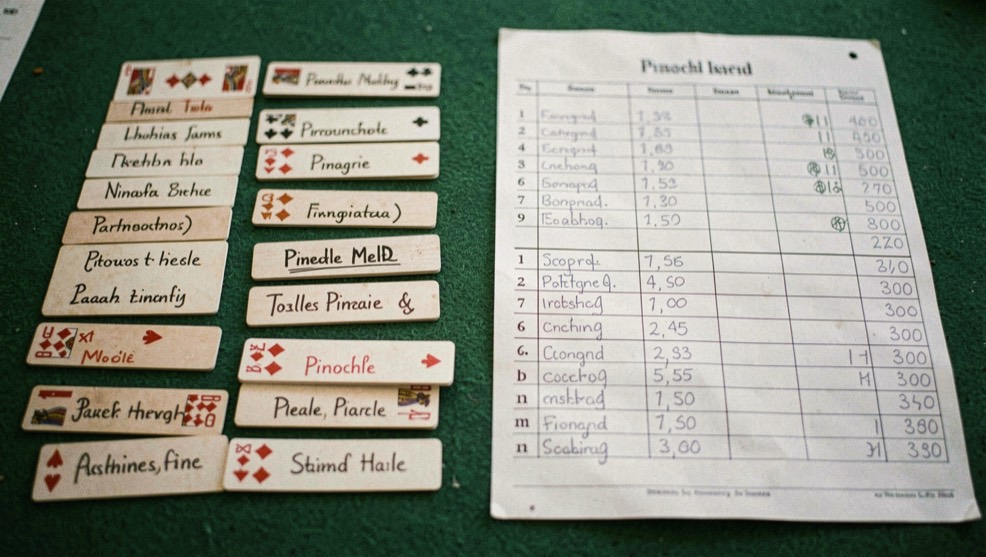
Pinochle is scored twice per hand: once for meld, the combinations laid down after trump is named, and once for trick points, gathered across twelve tricks. The two books are added to answer one question, did the bidding partnership cover its bid, and the whole system runs on fixed values every table can write on a single card. This guide collects those values, shows how a deal totals 250 points by arithmetic alone, and marks the places where popular variants disagree so the house rule is chosen before the deal, not during it.
The first book: meld
Meld is scored immediately after the high bidder names trump, partnership by partnership, from the combinations held in the twelve card hands. The standard values below are the published game; regional books differ most on the run, which some tables score at 25 and others at 15, and on the dix, which some pay only on capture of a trick. Fix the book at the table, in writing on the score sheet, and the rest of the game is arithmetic.
| Combination | Points | Variant notes |
|---|---|---|
| Run in trump: ace, ten, king, queen, jack | 15 | Some tables score 25; agree before dealing |
| Double run | 150 | Instead of the single run, never in addition |
| Marriage in trump | 4 | Extra kings and queens in trump each add again |
| Common marriage off trump | 2 | Once per suit |
| Pinochle: jack of diamonds, queen of spades | 4 | Double pinochle 8; some books pay 30 |
| Aces around | 10 | One ace per suit; 100 for the double |
| Kings, queens, jacks around | 8, 6, 4 | One of the rank in every suit |
| Nine of trump, the dix | 1 | Standard pays after the holder wins a trick |
The second book: tricks
Trick points ride on the cards themselves. Every ace gathered counts eleven, every ten counts ten, every king four, every queen three, every jack two, and nines nothing, which sums to exactly 240 across the deck; the last trick adds ten and closes the deal at 250. Because the total is fixed, the defenders' score is known the moment the makers' count is read: a partnership that took 150 trick points handed its opponents exactly 100, and both numbers go on the sheet without a second count.
| Cards | Points each | Deck total |
|---|---|---|
| Eight aces | 11 | 88 |
| Eight tens | 10 | 80 |
| Eight kings | 4 | 32 |
| Eight queens | 3 | 24 |
| Eight jacks | 2 | 16 |
| Eight nines | 0 | 0 |
| Last trick bonus | 10 | 250 total |
The bid and going set
The bid is a promise of meld plus trick points. When the hands are counted, the makers add their books: if the sum reaches the bid, both partners score meld and tricks in full; if it falls short, the hand is set, the makers score nothing at all, and the defenders score their own meld and tricks. The set is pinochle's guillotine, and it is why conservative bidders outlive brave ones: a failed fifteen costs the partnership everything it actually held, while a made fifteen at the wire costs nothing but sweat.
The arounds and their doubles
One family of meld deserves its own arithmetic note: the arounds. Aces around pay 10, kings around 8, queens around 6 and jacks around 4 in the standard book, one card of the rank in each of the four suits. Both copies of the rank in all four suits doubles the payment, so double aces around is 100 and is the most celebrated meld in the game short of the double run. The arounds stack freely with runs and marriages: a king and queen of trump already counted in the run still belong to their king around and queen around if the other three suits are present, and the sheet should show each line separately, because that is how the auction was priced.
Game, and reading the sheet
Game is 150 points in the standard partnership game, and a session of four to six deals decides most evenings. The score sheet carries four columns of running totals plus a line for the bid, because every entry in pinochle scoring is auditable: meld written per combination, tricks written per deal, bid written before the play. A table that writes those five facts per deal can reconstruct any dispute from the sheet, which is why the tournament game treats the sheet as part of the equipment rather than as a courtesy.
Common mistakes
Scoring the double run as 150 plus the single run's 15. Paying the dix before its holder has taken a trick. Counting an extra king in trump as nothing when it actually adds a second marriage's value with the queen already counted. Forgetting that defenders score even when the makers make their bid exactly. And adding meld to tricks before checking the bid, which lets a set partnership score a hand it lost.
The ledger in one card
Write the meld book on one side of a card and the trick values on the other, deal, and the scoring will never slow the game again. The rules that produce these numbers, deal to last trick, sit in the pinochle rules guide, the sheet columns themselves are drawn in the score sheets guide, and the immigrant route that brought this ledger to America is the pinochle history. Count both books, bid the honest sum, and let the sheet do the arguing.